
No Hot Water? What to Check First, and When It Is Urgent
Lost hot water completely? A few safe checks tell you whether it is a simple reset or a failed unit, and whether it can wait until morning or needs a plumber tonight.
By the Toorak Plumbers teamPublished 14 July 2026
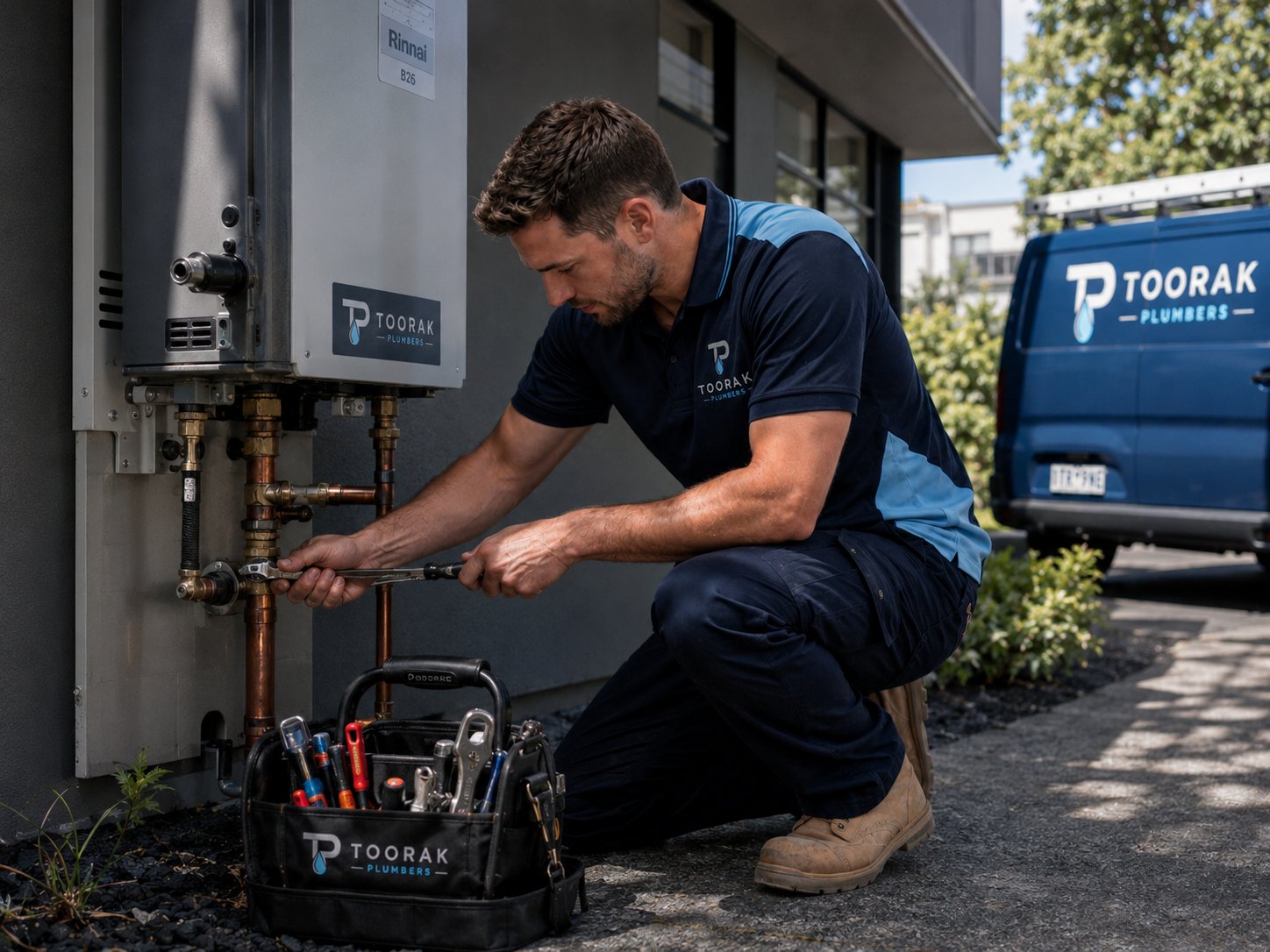
First, is it no hot water or not enough hot water?
These are two different problems and the fix is different for each. No hot water at all, where the tap runs cold no matter how long you wait, points to the unit not heating: a pilot out, a tripped circuit, a failed element or a system at the end of its life. Hot water that starts warm and runs cold after a few minutes is usually a capacity or thermostat issue rather than a dead unit, and our guide on hot water running out fast covers that case.
This guide is about the first situation: the water is cold and staying cold. Before you assume the worst, there are a handful of safe checks worth doing, because sometimes it really is a reset rather than a replacement. Which checks depend on whether your system runs on gas, electricity or a heat pump, so start by working out which one you have.
Safe checks you can do yourself
If you have a gas unit, look at whether the pilot light is still lit, usually visible through a small window at the base. Check that other gas appliances in the house still work, because if the whole gas supply is off, that is the real problem. You can try relighting the pilot once or twice following the instructions on the unit, but if it will not stay lit, stop there. A pilot that keeps going out usually means a failing thermocouple or gas valve, which is a plumber or gasfitter job, not something to keep fighting.
If you have an electric unit, check the switchboard for a tripped safety switch or breaker labelled for hot water and reset it once. Many electric systems in this area run on off-peak power, which only heats overnight, so if an element or timer has failed you will have plenty of hot water in the morning and none by evening. Heat pump units have a control panel that may show an error code worth photographing before you call. In every case, if a reset trips straight back off, do not keep resetting it, that is the system telling you something has failed.
Signs the unit itself has failed
Some symptoms mean the problem is the tank, not a switch. Water pooling underneath the unit or a steady drip from the base means the tank has corroded through, and a leaking tank is a replacement, not a repair, because there is no sound way to patch a rusted cylinder. Rusty or discoloured hot water, a rumbling or knocking noise when it heats, or a unit that is simply old are all signs it is near the end.
Age matters more than anything. Most storage hot water systems last somewhere between ten and fifteen years, and past that they tend to fail without much warning. Our guide on hot water system lifespan goes into the numbers, but the short version is that if your unit is over a decade old and has just stopped, it is often more sensible to plan a replacement than to spend money nursing it through another winter.
Is no hot water actually an emergency?
Usually not, and we will be honest with you about that. A cold shower is uncomfortable, but no hot water on its own does not damage the house, so it is generally a next-available booking rather than a middle-of-the-night call-out. We would rather book you in properly than charge emergency rates for something that can safely wait until morning. There are two exceptions where it does become urgent.
The first is a unit that is leaking steadily, because that is water damage in progress and we treat it like any other leak. The second is anything involving a gas smell, in which case you should leave the area and call your gas distributor or emergency services first, not us. Beyond that, a household with a newborn, an unwell or elderly member, or a run of freezing weather is a fair reason to ask us to prioritise you, and we will do what we can. Just tell us the situation when you call.
Why hot water units fail around Toorak and Stonnington
A lot of hot water units on period homes in the inner east live outdoors, tucked down a side passage or against a back wall, exposed to years of weather because there was nowhere tidier to put them when they were installed. Outdoor units cop the cold, and cold snaps are hard on ageing tanks and valves. Access is often tight too, which is worth knowing because it can affect how a replacement is handled.
We also see a lot of systems that have been quietly limping for a while, a tempering valve that has stopped regulating, an element that only half works, a thermostat drifting out of range, until a cold night finishes the job. If yours has been giving less hot water than it used to for a few months and has now stopped altogether, that back story is useful to mention, because it usually confirms the unit rather than the supply.
What we do on a hot water call
We start by working out whether it is a repair or a replacement, and we tell you straight rather than defaulting to the bigger job. If it is a thermocouple, an element, a thermostat or a valve on a unit with life left in it, a repair is often the honest call. If the tank is leaking or the system is well past its years, we talk you through replacement options, including whether gas, electric or a heat pump makes sense for your place and your bills.
Whatever the fix, you get a fixed price before work starts, and any new installation is done to standard with the compliance paperwork that goes with it. If you are choosing a new system, our guides on choosing a hot water system for a period home and comparing gas, electric and heat pump units are a good place to start before you decide.
Common questions
My gas pilot light will not stay lit. Can I keep relighting it?
Try once or twice following the instructions on the unit. If it will not stay lit, stop. A pilot that keeps dropping out usually means a failing thermocouple or gas control valve, which needs a licensed plumber or gasfitter rather than repeated relighting. If you ever smell gas while doing this, stop, leave the area and call your gas distributor or emergency services.
I have no hot water but the unit is not leaking. Can it wait until morning?
In almost all cases, yes. No hot water on its own does not damage the house, so it is usually a normal booking rather than an emergency call-out, and booking it properly saves you paying urgent rates for something that can wait. The exceptions are a leaking unit or a gas smell. If your household has particular needs, tell us and we will try to prioritise you.
How long should a hot water system last?
Most storage systems last around ten to fifteen years depending on type, water quality and whether the anode has ever been replaced. Past a decade they tend to fail suddenly rather than gradually. If your unit is that age and has just stopped, planning a replacement is often more sensible than repeated repairs. Our hot water system lifespan guide covers this in detail.
My electric hot water ran out and never came back. Why?
Many electric systems run on off-peak power and only heat overnight, so if the element, thermostat or timer has failed you get a normal supply in the morning that runs out by evening and does not recover. Check the switchboard for a tripped breaker and reset it once. If it trips again or there is no improvement overnight, the element or thermostat likely needs replacing.